A Conversation with David Yagi from Genun Games — One of the Cofounders of Ascent Rivals
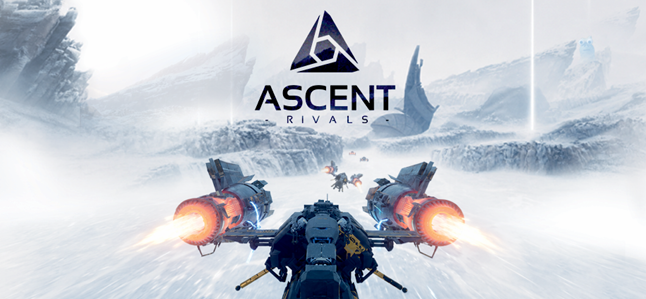
At Monolith, we love shining a spotlight on passionate creators who push boundaries in gaming. Today, we’re excited to feature David Yagi from Genun Games, one of the developers behind Ascent Rivals—a high-octane multiplayer combat racer that blends driving, combat, and battle-royale intensity into one adrenaline-charged experience.
Built from the ground up by a small indie team, Ascent Rivals is a testament to ambition, experimentation, and relentless iteration. We sat down with David to talk about the challenges, surprises, and creative decisions behind the game’s development.
Developer Q&A with David
M: What’s been the biggest technical hurdle so far?
D: Multiplayer games are incredibly complex because every player needs to see the same action at the same time. In a fast-paced, physics-driven game like Ascent Rivals, even small amounts of latency can impact movement, collisions, and combat.
We’ve spent a lot of time optimizing the networking to make matches feel smooth and responsive. Technologies like NVIDIA Reflex and Frame Generation have helped us deliver a more responsive, higher-performance experience for players.
M: Have there been any “we did NOT expect that to break” moments?
D: Almost every major feature creates unexpected bugs somewhere else. That’s just game development! Sometimes a small physics tweak ends up affecting gameplay or completely unrelated systems.
M: What’s the most surprising thing players have done?
D: New tech! Players are constantly finding creative ship builds, movement techniques, and unexpected combinations of parts and augments that we never anticipated. The community is always pushing the mechanics further than we imagined.
M: Has community feedback ever forced a major redesign?
D: Absolutely. One of the biggest examples was our original Reserve system. Players had to choose the parts they wanted to access before the match, which made them feel locked into a strategy and limited their ability to adapt.
M: How do you filter feedback?
D: Based on community feedback, we redesigned it into a more traditional buy phase, similar to Counter-Strike, where players can spend the ARC they’ve earned between heats on whatever upgrades make the most sense for the current match. It gave players far more flexibility and made the strategy feel much more dynamic.
M: Ascent Rivals has a unique visual identity. How did you settle on the art style?
D: We wanted to push the boundaries of what players expect from an indie studio. From the beginning, our goal was to create visually striking worlds that could stand alongside much larger productions while still maintaining our own identity.
We’re using the latest technologies to maximize visual quality, but we’ve also put a lot of effort into scalability. Players have extensive graphics options to fine-tune performance for their hardware, so whether you’re chasing maximum frame rates for competitive play or cranking everything up for the best visuals, the game is designed to deliver a great experience.
M: Were there early concepts that didn’t make the cut?
D: Absolutely. Early on, we had a much more granular ship customization system with significantly more individual parts. While it offered a lot of freedom, we found it was overwhelming for players and made building a ship more complicated than it needed to be.
We simplified the system by combining related parts together, which made customization much more intuitive while still preserving meaningful strategic choices. In the end, it created a cleaner experience without sacrificing depth.
M: If you had an unlimited budget for one stylistic feature, what would it be?
D: Animated skins and skins that make bumps form on the human skin would be our goal.
M: What’s something people don’t realize about building a game like Ascent Rivals?
D: Most people only see the finished feature, not everything that goes into making it. Building a high-fidelity multiplayer game is incredibly complex, and even seemingly simple features can take weeks or months to design, prototype, test, and refine.
We’re constantly pushing ourselves to innovate and expand what’s possible in the racing genre, so every decision is carefully considered. Our goal is to create something that feels fresh, original, and genuinely fun for players.
M: How do you balance development?
D: Game development is all about prioritization. We’re constantly balancing new features, bug fixes, performance improvements, and community feedback. Every hour spent on one area means another has to wait, so we’re always evaluating what will have the biggest impact on the player experience. It’s a constant balancing act, but keeping the game fun and polished is always our top priority.
M: If you could outsource one part forever?
D: If we could outsource one thing forever, it would be creating new ships, weapons, parts, skins, and environments. Having an endless stream of high-quality art would let us focus even more on gameplay while giving players a constant flow of fresh content to discover.
M: What’s next for the game?
D: Our biggest focus is growing the community and expanding the competitive experience. We’re continuing to improve matchmaking, add new content and progression systems, and run more tournaments and community events. We want Ascent Rivals to be a game that players can keep coming back to, whether they’re competing for the top of the leaderboard or just having fun with friends.
M: Are there long-term features you’re excited about but haven’t announced?
D: Definitely. We have several ideas we’re incredibly excited about, but we’d rather show them when they’re closer to reality than overpromise too early.
M: Where do you see Ascent Rivals in a year?
D: We’d love to see a thriving competitive community with regular tournaments, a growing creator ecosystem, and players continuously discovering new strategies every season.
Fun Questions
M: If Ascent Rivals had a theme song?
D: A mix of electronic, rock, and synthwave. Something that gets your heart racing before the lights go green.
M: Which mechanic reflects your personality?
D: The PRS system matches my powerful toots.
M: What’s the weirdest idea you seriously considered?
D: Sticky bouncy grenade launcher. Every time we think we’ve escaped the idea, someone in the community brings it up again.
M: If you had an unlimited budget and a full AAA team?
D: We’d grow the team, but only a little. Our secret sauce is our tight-knit, hardworking team that can move quickly and stay aligned. We want to prove what’s possible for modern indie studios by staying lean while building games that can compete with much larger teams.
With an unlimited budget, we’d make a few strategic hires, but we’d invest most of it into marketing, player acquisition, and bigger tournament prize pools. Building a great game is only half the battle. Getting players into the game and creating exciting competitive events is what helps a community thrive.
Try Ascent Rivals
If you haven’t played it yet, now’s the perfect time to jump in and support an ambitious indie project built with passion.