If you grew up gaming in the 80s or 90s, you probably remember the absolute ritual of opening a new game box. Before you even popped the cartridge into the console, you flipped through the glossy pages of the physical manual. Those booklets weren’t just for button layouts they were where the story lived.
Because early hardware couldn’t support massive blocks of text or cinematic cutscenes, developers used manual pages to explain why a pixelated blue hedgehog was running at supersonic speeds or how a lone space marine ended up on a demon-infested moon.
Fast forward to 2026. The physical manuals are long gone, but something spectacular has taken their place. Gaming has officially entered its golden age of narrative. What was once a medium defined by technical limitations has evolved into the most powerful storytelling canvas on the planet, comfortably surpassing traditional books and films in its capacity for emotional depth.
Here is why this year represents the absolute peak era for video game storytellers and how the medium learned to break our hearts and blow our minds in ways Hollywood can only dream of.
The Shift from “Watching” to “Inhabiting”
The core limitation of a brilliant book or an award-winning film is the invisible wall between the audience and the protagonist. When you watch a movie, you are a passive observer witnessing someone else’s choices.
Games shatter that wall through active agency. In a modern narrative masterpiece, you aren’t just watching a character suffer, heal, or grow—you are actively pulling the trigger, making the call, or walking the miles.
Consider how our community talks about the landmarks of modern gaming fiction:
- Red Dead Redemption 2: We didn’t just watch Arthur Morgan’s tragic arc; we spent eighty hours managing his cough, riding his horse, and deciding what kind of man he would be before the end came. The emotional devastation of that ending hits harder than any film because we lived his redemption.
- The Last of Us Part I & II: These games push the boundaries of perspective. By forcing players to inhabit different viewpoints, the narrative demands empathy for characters you might otherwise hate, turning a standard survival story into a visceral interrogation of grief and cycle-of-violence dynamics.
- Baldur’s Gate 3: The absolute gold standard for interactive authorship. It treats the player not as a consumer of a story, but as a co-writer, where even a minor, improvised choice in Act 1 can ripple into a heartbreaking or triumphant conclusion dozens of hours later.
Environmental Architecture: Stories Written in the Scenery
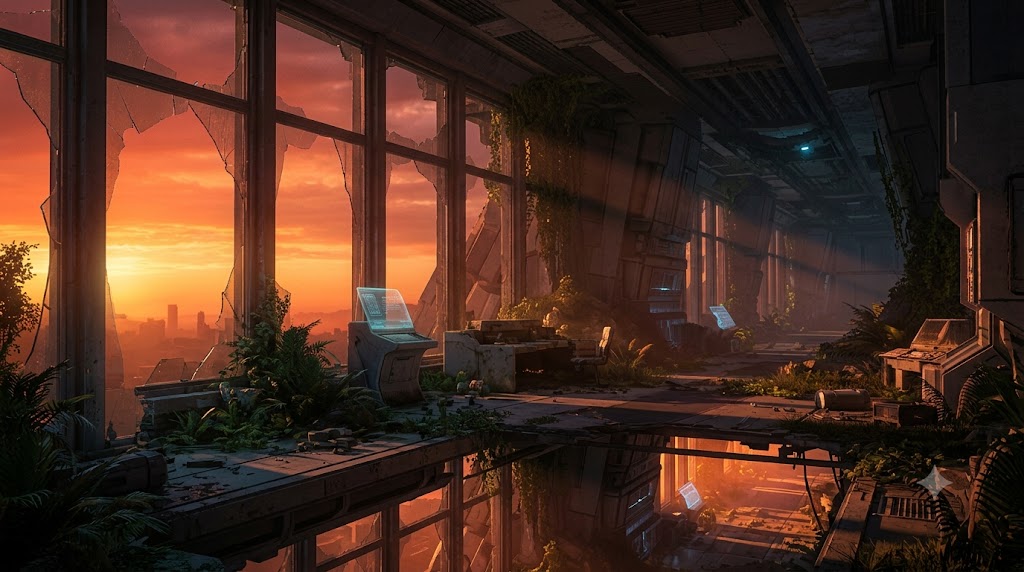
In traditional media, exposition is almost always delivered through dialogue or narration. Games have mastered an entirely different language: environmental storytelling.
Modern game designers build worlds where history isn’t explicitly told—it’s discovered. Think of walking through the ruined, underwater art-deco corridors of BioShock, where a knocked-over wheelchair, a bloody smear, and a discarded audio log tell a self-contained tragedy without a single cutscene.
In 2026, this technique has reached an astonishing level of maturity. Games like Horizon Zero Dawn use the literal landscape to tell a dual-timeline mystery, contrasting primitive tribal structures against the rusted, giant metal skeletons of a forgotten high-tech past. The player becomes an archaeologist of the apocalypse, piecing together the narrative at their own pace.
The 2026 Landscape: Blending Mechanics with Meaning
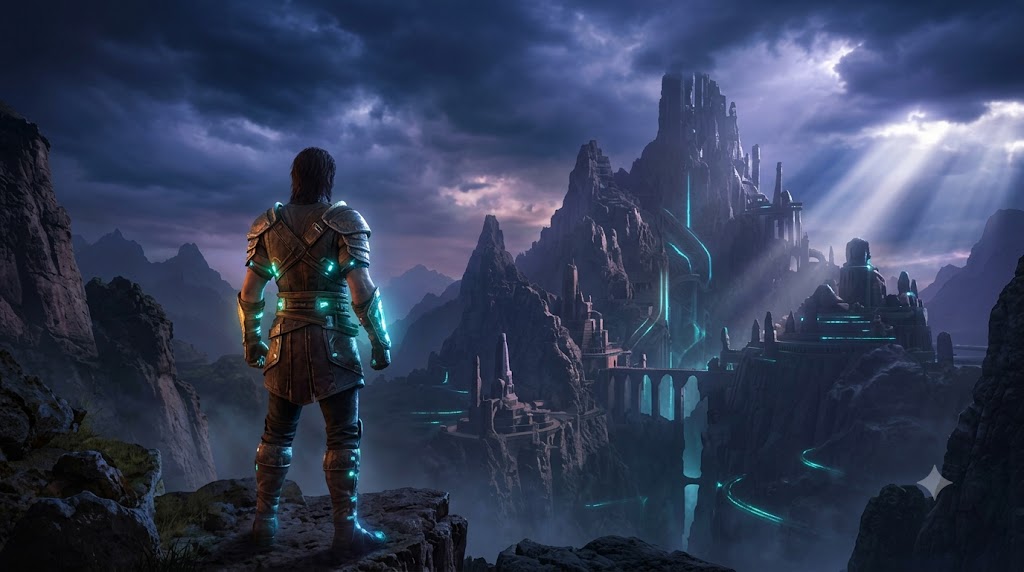
What makes the current era of gaming so uniquely brilliant is that narrative designers no longer treat gameplay and story as separate entities. For decades, John Carmack’s infamous quote—“Story in a game is like a story in a porn movie; it’s expected to be there, but it’s not that important”—hung over the industry.
Today, that idea feels like ancient history. The modern era is defined by ludonarrative resonance—when the actual act of playing the game reinforces the emotional themes of the script.
The Ultimate Modern Narrative Standard: The best games don’t pause the gameplay to tell you a story; they use the gameplay as the story.
Look at how roguelikes have revolutionized the narrative loop. In Hades and its massive sequel, Hades II, dying isn’t a failure screen that resets your progress; it is the literal engine that moves the story forward. Every time you die, you return to the underworld hub to find new dialogue, evolving relationships, and deeper lore. The frustration of losing a run is completely transformed into narrative anticipation.
Similarly, games like Disco Elysium turn a player’s internal psychological struggles into dynamic RPG mechanics, proving that a fierce debate between your own “Logic” and “Ancient Reptilian Brain” can be more thrilling than any cinematic explosion.
The Verdict
We’ve come an incredibly long way from reading backstory paragraphs in a paper booklet while waiting for our consoles to boot up.
In 2026, gaming stands tall as the definitive narrative medium of our generation. Writers, actors, developers, and players are collaborating to build living, breathing universes that linger in our minds long after the screen goes dark. We don’t just remember these stories; we remember being there.
💬 What about you?
What is the one video game story that completely ruined you emotionally or changed the way you look at storytelling? Let’s talk about it in the comments below!