
Monolith Gaming Volunteer Training Programmes & Community Growth
Investing in Volunteers: How Monolith Gaming’s Upskill Training Programmes Build Stronger Communities Volunteers are the foundation of many successful community organisations, and at Monolith Gaming, they play a vital role in everything we do. From supporting events and engaging with community members to helping deliver projects and initiatives, our volunteers bring energy, enthusiasm, and invaluable skills that help our organisation thrive. As the gaming and community sectors continue to evolve, so too does the need for volunteers to develop new skills and gain relevant experience. That is why Monolith Gaming is committed to investing in our people through a range of Upskill Training Programmes designed to support personal growth, build confidence, and create opportunities for volunteers to reach their full potential. We believe that volunteering should be a mutually beneficial experience. While volunteers contribute their time and expertise to support our mission, they should also have access to opportunities that help them learn, develop, and grow. Our commitment to continuous development ensures that volunteers gain meaningful experiences that can benefit them both within Monolith Gaming and beyond. Why Volunteer Development Matters Volunteer development is about more than simply teaching new skills. It is about empowering individuals to take on new challenges, build confidence, and become active contributors to their communities. Effective training programmes provide volunteers with the knowledge and tools they need to perform their roles confidently while also creating pathways for personal and professional growth. By investing in training and development, organisations can retain volunteers for longer, strengthen community engagement, and create a more sustainable future. At Monolith Gaming, we recognise that every volunteer arrives with a unique set of skills, experiences, and aspirations. Our Upskill Training Programmes help individuals build on their strengths while exploring new areas of interest. Building Knowledge and Confidence One of the most significant benefits of volunteer training is the increase in confidence it provides. For many people, volunteering may be their first experience working within a community organisation, leading a project, organising an event, or supporting members of the public. Having access to structured learning opportunities helps volunteers feel prepared and supported in their roles. Our training programmes may cover areas such as: By developing these skills, volunteers become more confident in their abilities and better equipped to contribute positively to the organisation and the wider community. Enhancing the Volunteer Experience People are more likely to remain committed to volunteering when they feel valued and supported. Providing opportunities for ongoing development demonstrates that volunteers are recognised as an essential part of the organisation. Rather than viewing volunteers simply as helpers, Monolith Gaming sees them as future leaders, mentors, and ambassadors. Training and development programmes can significantly enhance the overall volunteer experience by creating opportunities to learn new skills, connect with others, and take on greater responsibilities. This sense of progression helps maintain motivation and encourages long-term involvement within the organisation. When volunteers feel that their contributions are making a difference and that they are personally developing at the same time, the experience becomes far more rewarding. Developing Valuable Transferable Skills One of the most important advantages of volunteer upskilling is the development of transferable skills. Many of the skills learned through volunteering can be applied in education, employment, and everyday life. Volunteers often discover that their experiences at Monolith Gaming help them improve their communication abilities, build leadership skills, and develop greater confidence when working with others. Some of the key transferable skills gained through volunteering include: These skills can be highly beneficial for students seeking future career opportunities, professionals looking to broaden their experience, or individuals simply seeking personal growth. Creating Future Community Leaders Strong communities rely on strong leadership, and leadership development is a key focus of Monolith Gaming’s approach to volunteer development. Many people do not initially see themselves as leaders. However, with the right support, training, and encouragement, volunteers often discover abilities they never realised they possessed. Our Upskill Training Programmes are designed to help volunteers take on increasing levels of responsibility while developing the confidence required to lead teams, coordinate activities, and mentor newer members. By nurturing leadership skills within our volunteer base, we create a sustainable model of growth where experienced volunteers can support and inspire the next generation of community members. Strengthening the Gaming Community The benefits of volunteer development extend far beyond individual growth. Every volunteer who gains new skills contributes to creating a stronger and more resilient gaming community. Better-trained volunteers can provide greater support at events, engage more effectively with participants, and help maintain a positive and inclusive environment for everyone involved. As volunteers share knowledge and experiences with one another, they create a culture of collaboration and continuous improvement. This knowledge-sharing helps improve the quality of activities and services delivered by the organisation while fostering stronger relationships throughout the community. A skilled volunteer network is one of the most valuable assets any community organisation can have. Fostering a Culture of Lifelong Learning At Monolith Gaming, we believe that learning should never stop. Our Upskill Training Programmes are designed to encourage curiosity, creativity, and continuous improvement. We want every volunteer to feel empowered to explore new ideas, acquire new skills, and challenge themselves in a supportive environment. By embracing a culture of lifelong learning, we create opportunities for volunteers to grow alongside the organisation. This commitment not only benefits individuals but also strengthens the collective knowledge, capability, and resilience of our community. Looking to the Future As Monolith Gaming continues to grow and expand its activities, investment in volunteer development will remain a central part of our mission. Our volunteers are more than contributors to our organisation. They are community builders, role models, mentors, and future leaders. Through our Upskill Training Programmes, we aim to provide meaningful opportunities that help individuals develop valuable skills, build lasting friendships, and make a positive impact within the gaming community. By supporting continuous learning and personal development, we are creating a stronger, more capable volunteer network that is prepared for the challenges and opportunities of the
30 Years of Gaming Together: Lessons from a Community Founded in 1996
If you were online in 1996, you remember the sound: the electronic screech of a 28.8k dial-up modem fighting for life, followed by the quiet triumph of connecting to IRC or an unencrypted Battle.net channel. Back then, gathering a squad meant coordinating phone calls, waiting for Mom to get off the landline, and hoping your ping stayed under 300ms so your character wouldn’t rubberband into oblivion while fighting Diablo’s Butcher or rushing Zerglings in StarCraft. Thirty years later, our core group is still gaming together. We’ve grown from high schoolers staying up past 3:00 AM on summer break to working adults, parents, and retirees spread across different time zones. We’ve survived the death of dial-up, the migration of platforms, and the shift from niche hobby to global culture. Here is how our community survived three decades of technological evolution—and what 30 years on the digital frontlines taught us about building online connections that last. 1. Platforms Die. Culture Survives. Over thirty years, an online community lives through several digital exoduses. If your group ties its entire identity to a single platform, you risk dying when that platform fades. Every shift required intentional effort. Moving from threaded forums to Discord felt chaotic to our veterans; transitioning from custom Ventrilo servers to free VoIP platforms felt like giving up something home-grown. The Lesson: The “place” you hang out in is just drywall and paint. The community is the people inside. Don’t fight technological shifts—embrace new tools early enough so no one gets left behind on a ghost ship platform. 2. Low-Friction Gaming Keeps the Engine Running In 1996, getting eight people into the same match required an act of Congress. You needed matching game patches (downloaded over hours), port-forwarding wizardry, and third-party tools like GameSpy or Kali. Today, modern cross-platform ecosystems mean a friend on a PS5, another on an Xbox, and two on PC can jump into a match with zero setup in under thirty seconds. As a community ages, time becomes everyone’s rarest resource. Cross-play, drop-in multiplayer, and persistent Discord voice channels saved our group. Removing friction isn’t just a convenience; it’s the single biggest factor in keeping busy adults playing together. 3. Evolve Beyond the “Main Game” Many gaming guilds form around a single title—a World of Warcraft raiding guild, a Counter-Strike clan, or a Destiny fireteam. But games inevitably sunset, meta shifts alienate players, or collective burnout strikes. Our community survived because we made a conscious decision early on: We are a social group that plays games, not a game group that happens to be social. When our primary game died, we didn’t dissolve. We pivoted to: 4. Institutional Memory is Your Group’s Superpower What keeps someone coming back to the same Discord server for ten, twenty, or thirty years? It’s the shared history. We keep a #hall-of-fame channel in our server filled with screenshots spanning decades—from grainy 640×480 BMPs of 1990s guild events to modern 4K clips of hilarious game-ending blunders. We still quote jokes that originated in an IRC channel during the Clinton administration. When new members join, they aren’t just joining a voice chat; they’re stepping into an ongoing story. Preserving your community’s lore creates a sense of belonging that no algorithm can replicate. The Ultimate Takeaway Thirty years ago, the media often framed online gaming as an isolating pastime—a hobby for people sitting alone in dark rooms. Looking back from 2026, the opposite turned out to be true. Those late-night IRC chats and high-latency matches were the foundation for lifelong friendships. We’ve attended each other’s weddings, sent support during tough life events, and watched a generation of young gamers grow up. Hardware changes, platforms vanish, and game genres go in and out of style. But if you focus on the people behind the handles, a gaming group can last a lifetime. Here’s to the next 30 years.
What the Next Era of Game Engines Means for Indie Studios
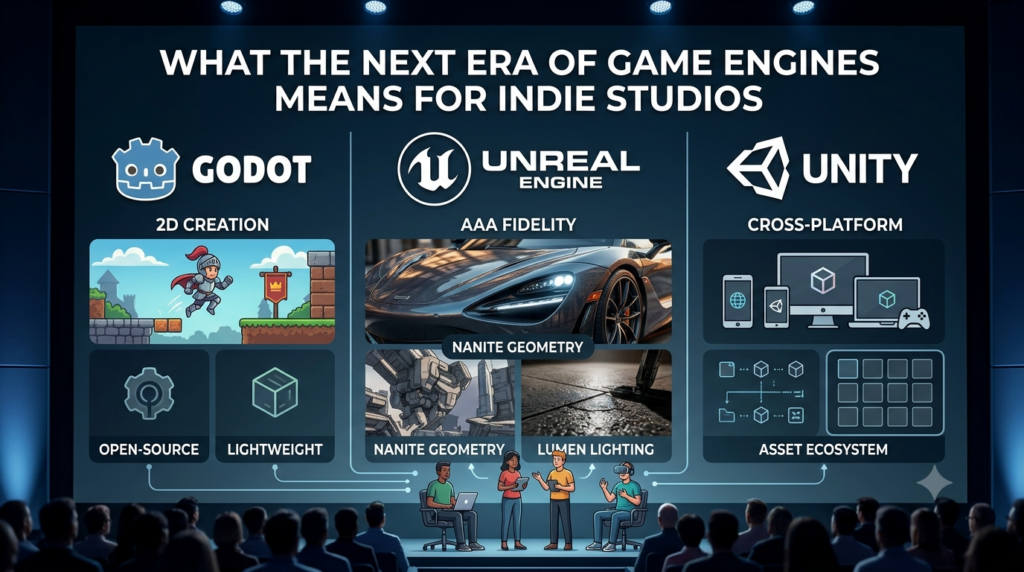
There was a time when making a game with production values matching major studios required tens of millions of dollars, bespoke proprietary engines, and a team of hundreds of developers. That era is officially over. Today, the gap between a massive AA studio and a core team of three working out of a home office is narrower than it has ever been. Driven by fierce competition, rapid technical advances, and shifting licensing models across Unreal Engine, Godot, and Unity, modern game development tools are democratizing what small teams can achieve. Here is a breakdown of how the big three game engines are reshaping the landscape for indie developers—and why the playing field has never been more level. 1. Unreal Engine: Bringing AAA Fidelity to Indie Budgets Unreal Engine 5 (UE5) transformed the perception of what small teams could build. Features that used to eat up months of technical art pipeline work are now automated natively in the engine: For indie developers targeting photorealistic visuals or ambitious 3D worlds, Unreal Engine allows a team of five to deliver fidelity that previously required fifty. 2. Godot: The Open-Source Revolution If Unreal represents raw graphical horsepower, Godot represents independence and ultimate control. Expanding rapidly following recent engine license shakeups across the industry, Godot has grown into a formidable production engine: For solo developers, game jam enthusiasts, and small studios creating stylized 3D or intricate 2D titles, Godot offers complete ownership with zero platform risk. 3. Unity: Refined Tooling & Ecosystem Power Despite turbulent market shifts in recent years, Unity remains a dominant powerhouse for cross-platform and mobile deployment. Its recent focus on stability, rendering upgrades, and developer trust has stabilized its position: Engine Breakdown at a Glance Feature / Criteria Unreal Engine 5 Godot 4 Unity 6 Best Suited For High-end 3D, Photorealism, Cinematic titles 2D games, Stylized 3D, Rapid prototyping Cross-platform, Mobile, Systems-heavy games Licensing Model Free until $1M revenue; 5% royalty thereafter 100% Free (MIT License, $0 forever) Free under $200k funding/rev; seat license above Key Advantage Automated LODs (Nanite) & Lighting (Lumen) Instant boot times, lightweight footprint, open-source Massive asset store & multiplatform deployment Primary Languages C++ & Blueprint Visual Scripting GDScript (Python-like), C#, C++ C# The Takeaway: What This Means for Indie Studios The evolution of modern game engines changes the fundamental economics of game development: The technical barriers to entry have officially crumbled. In this new era, the deciding factor for an indie game’s success isn’t the size of its engineering team—it’s the strength of its core idea and execution.
The Death of the Console War: How Cross-Play Redefined Multiplayer Gaming
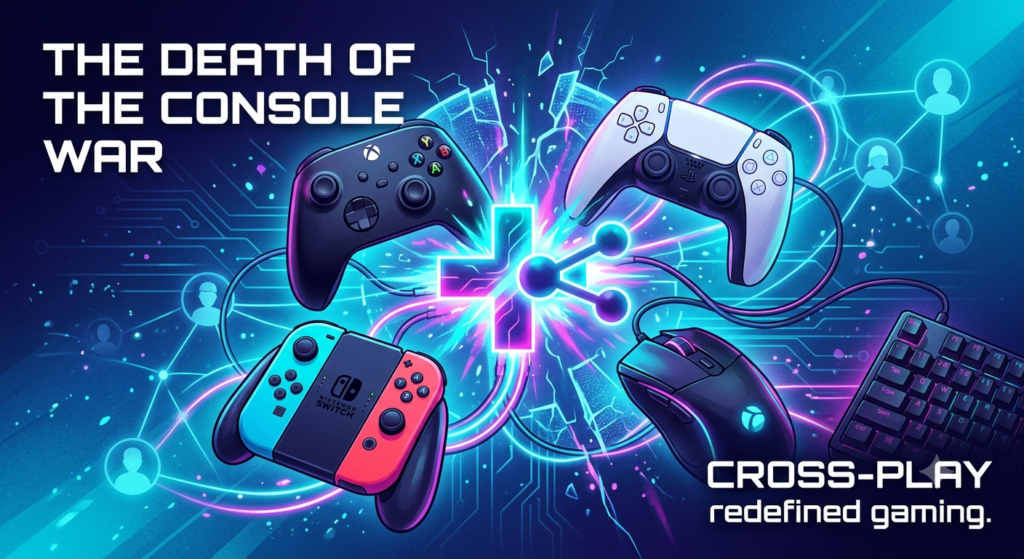
For nearly three decades, playground and forum debates were ruled by a single, intractable question: PlayStation or Xbox? (Or Nintendo, depending on how old-school you were.) Back then, choosing a console wasn’t just a hardware purchase—it was a socio-cultural pledge of allegiance. If you bought an Xbox 360 to play Halo 3 and your best friend bought a PlayStation 3 to play Uncharted, you didn’t just end up with different plastic boxes under your TVs. You ended up with completely isolated digital lives. The walls between ecosystems were thick, reinforced by corporate self-interest and technological silos. Fast forward to today, and that tribalism feels like an artifact of an ancient era. The console war didn’t end with a decisive victory by one manufacturer. Instead, it dissolved because the fundamental nature of online multiplayer changed forever. Cross-play killed the console war—and in doing so, it completely redefined gaming communities. 1. From Fractured Squads to United Friendships Remember the frustrating dance of trying to organize a weekend gaming session? It used to feel like negotiating a complex treaty: “I’ve got the game on PlayStation.” “Ah, man. I’m on Xbox.” “Guess I’ll just play solo…” Online gaming historically suffered from forced fragmentation. Real-world friend groups were routinely split by platform choice, forcing players to compromise on either the hardware they wanted or the friends they wanted to play with. When games like Fortnite, Rocket League, and Call of Duty: Modern Warfare aggressively pushed cross-platform play into the mainstream, the social dynamic inverted overnight. Suddenly, it didn’t matter if you were on a PC, a PS5, an Xbox, or a Switch on the couch—you were in the exact same lobby, talking through unified voice channels like Discord. Cross-play took multiplayer gaming from a fragmented hardware lock-in and transformed it into a borderless digital hangout space. 2. The Death of the “Dead Lobby” Beyond personal relationships, cross-play solved one of online gaming’s most persistent mechanical issues: dwindling player pools. In the pre-cross-play era, a game’s lifespan was tied directly to its specific platform population. A mid-tier multiplayer title might thrive on PC for six months, sit on life support on PlayStation, and completely die on Xbox. Matchmaking times stretched from seconds into minutes, and regional servers outside North America and Europe often became ghost towns. By merging player bases, cross-play created massive, unified pools that transformed the player experience: 3. The Shift from Hardware Walls to Ecosystem Services When cross-play became an industry standard, platform holders were forced to rethink their entire business models. When your hardware choice no longer dictates who you can hang out with, selling a console purely on “that’s where your friends are” stops working. Sony, Microsoft, and Nintendo could no longer rely on network effects as a moat. Instead, the industry shifted from hardware lock-in to value-added services: The physical console stopped being a walled garden and became just one of many entry points into a broader ecosystem. 4. New Frontiers and Modern Friction Points It wasn’t a completely seamless transition. The fall of the console walls brought a new set of debate topics to the surface: Yet despite these growing pains, virtually no gamer wants to turn the clock back. Input-based matchmaking and opt-out cross-play toggles have given players agency, ensuring the benefits of unified player pools far outweigh the friction. The Verdict: Gamers Won The “Console War” made for great 2000s forum banter, but it was ultimately a tax paid by consumers—an artificial barrier that kept friends apart and shortened the lifespans of great games. Cross-play didn’t just fix matchmaking; it reframed how we view the entire medium. Today, the box under your television is just a renderer. The community, the friendships, and the games themselves are platform-agnostic. The console war is dead—and multiplayer gaming is infinitely better for it.
Handling live server disputes builds crucial conflict resolution and crisis communication abilities.

We’ve all seen it happen. Someone joins a Discord server, a Reddit community, or an esports league just looking for a group to hang out with. Six months later, they’re coordinating 300-player tournaments, managing a team of twenty moderators across three time zones, and handling live crisis communication when a server bot goes rogue. Outside of digital spaces, this work is often brushed off as “just managing a gaming group” or “moderating a forum.” But inside it, something remarkable is happening: volunteer communities have become the ultimate sandbox for modern leadership and project management. If you’ve ever stepped up from community member to community staff, you didn’t just pick up a shiny role tag—you acquired high-value professional skills. Here is how managing online spaces translates directly into real-world career muscle. 1. Project Management in High-Velocity Environments Organising an online tournament or launching a community event isn’t just “playing games”; it’s executing a full project lifecycle from ideation to post-mortem. Resume Translate: Instead of saying “Organized a community tournament,” frame it as: “Managed end-to-end logistics for a 128-team virtual event, coordinating a 10-person operations staff and delivering live streaming coverage to 5,000+ viewers.” 2. De-escalation & Crisis Communication If you’ve moderated an active server or forum, you’ve already completed an unaccredited Master’s degree in conflict resolution. Online communities operate 24/7, often with anonymous users, high emotional investment, and instant feedback loops. When drama erupts, staff members don’t have the luxury of hiding behind corporate PR approval chains. They must: These experiences build emotional intelligence, thick skin, and clear, empathetic communication skills that corporate HR and management teams spend thousands of dollars trying to train. 3. Leading Without Formal Authority In a traditional company, employees follow managers partly because of paychecks and hierarchy. In a volunteer community, nobody is getting paid, and anyone can log off at any second. Leading a team of volunteer moderators or event staff requires a completely different management style—one rooted in influence, culture, and shared vision rather than top-down authority: Bridging the Gap: How to Market Your Community Experience The biggest mistake community leaders make is keeping this experience off their professional profile. Hiring managers are actively looking for initiative, adaptability, and remote collaboration skills—community management proves all three. Community Activity High-Value Professional Skill Server/Forum Moderation Policy Enforcement, Conflict Resolution, User Safety Tournament & Event Hosting Project Management, Vendor & Talent Coordination, Live Operations Bot & Web Development Technical Implementation, Product Design, Process Automation Recruiting & Onboarding Staff Talent Acquisition, Team Leadership, Documentation The Takeaway Stepping up from a casual member to a staff role in a volunteer community is rarely easy—it takes patience, time, and grit. But it’s also one of the most accessible, low-risk, high-reward ways to practice real leadership before ever setting foot in a corporate boardroom. The next time you pull off a seamless community event or navigate a tough server conflict, remember: you’re not just building a server—you’re building your career.
The Art of the Playtest: What Devs and Players Actually Get Out of Early Access Events
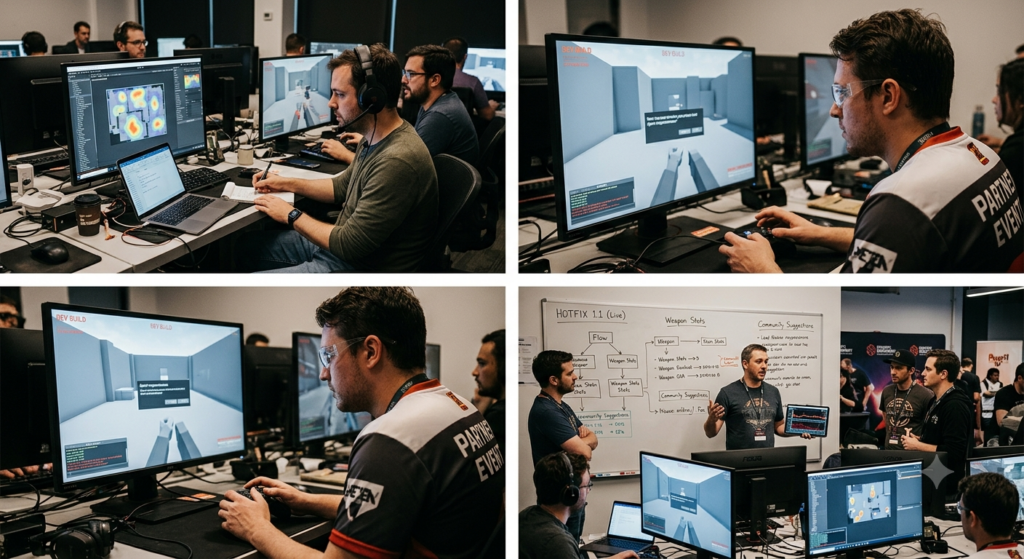
There’s a legendary moment in game development when a project leaves the sanitized isolation of internal Quality Assurance and enters the wild: the community playtest. Whether it’s a localised studio showcase, an exclusive partner event, or a sweeping Early Access playtest build, throwing real players into an unfinished game is equal parts terrifying and essential. For decades, playtesting meant sitting a participant in a quiet booth with an eye-tracker and a feedback form. Today, community-first events, such as studio partner showcases and creator playtests, have turned game refinement into a collaborative, live-action art form. So what actually happens when developers hand the controls over to the public before a game is finished? As it turns out, both sides leave the room with something invaluable. What Developers Get: Beyond Raw Telemetry Internal telemetry can tell a development team where players die, which weapon is selected most often, or how long a level takes to complete. What telemetry can’t measure is human emotion: frustration, confusion, boredom, or effortless flow. 1. The Crucible of “Mechanical Feel” Game mechanics rarely feel good on paper; they feel good in the thumbs. During early access showcases, developers aren’t just looking at bug reports—they’re watching player body language. 2. Live Balancing in the Fire When thousands of players (or hyper-focused community partners) jump into a playtest simultaneously, they break the game in ways internal QA never could. Players immediately find the mathematically optimal rotation, the broken frame-cancel, or the unintended weapon synergy. Seeing an over-tuned shotgun ruin a lobby in real time gives balance designers immediate, undeniable data to tweak Time-to-Kill (TTK), cooldown timers, and hitbox physics before the official release launch. What Players Get: Agency, Transparency, and Community From the player’s perspective, early access showcases are no longer just marketing hype—they are a seat at the design table. “Watching a mechanic you criticized on Friday get patched by Monday afternoon changes your entire relationship with a game. You stop feeling like a consumer and start feeling like an architect.” 1. A Peek Behind the Game Dev Curtain Gamers often view game design as a black box. Attending a partner showcase or closed playtest demystifies the process. Players get to see grey-box environments, untextured assets, and placeholder audio. Understanding why a feature takes months to calibrate fosters empathy and reduces the friction between communities and development studios. 2. Direct Impact on the Final Product There is an undeniable thrill in knowing a weapon balance, map adjustment, or quality-of-life feature exists in the shipping build because of feedback you submitted during an early test event. Feature Category Pre-Playtest State Post-Community Feedback State Movement Heavy inertia, delayed sprint startup Snappier direction changes, reduced momentum lag User Interface Nested sub-menus for inventory management Hotkey wheel with single-click quick-equip Combat Mechanics Flat damage numbers with standard audio Dynamic hit-markers with distinct visual/audio cues The Feedback Loop: Making Playtests Work Not all playtests are created equal. The most successful early access events rely on a tight feedback loop that respects both the developers’ vision and the players’ time: The Bottom Line Community playtests and partner showcases are more than just server stress tests or promo opportunities. They represent a fundamental shift in how modern games are crafted—replacing top-down design assumptions with real-world human experience. When developers open their doors early and players trade passive consumption for active collaboration, the end result is almost always the same: a better game for everyone.
The Gamer’s Reset: Our Favorite Cozy Games for High-Stress Days
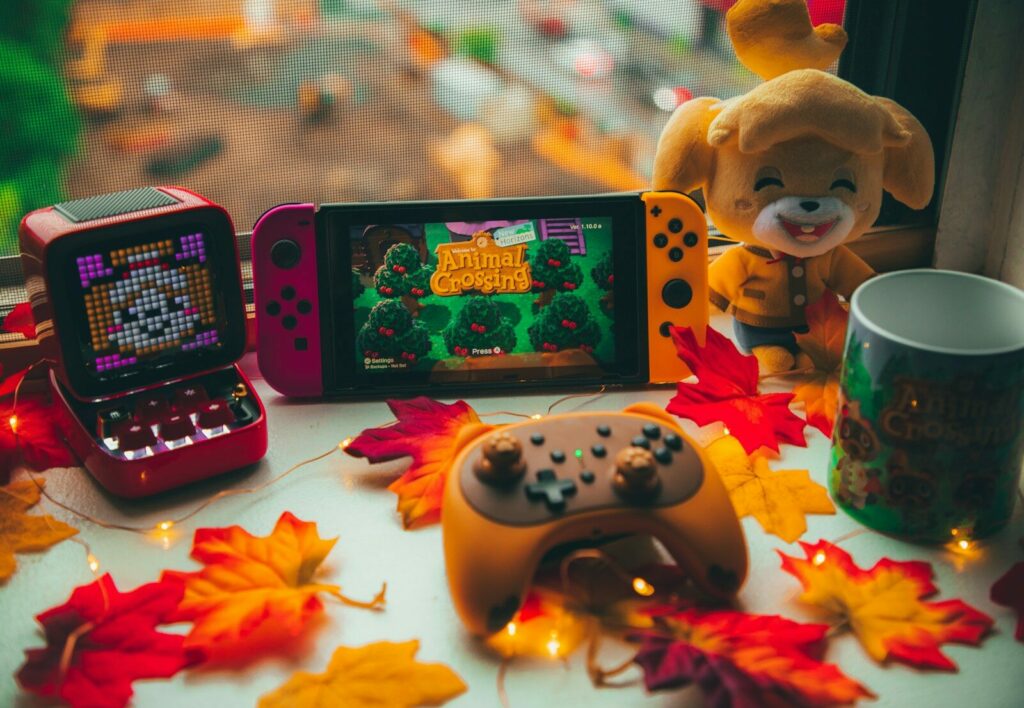
We’ve all had those days. Your inbox is overflowing, your brain feels like a browser with 47 tabs open, and even the thought of logging into a fast-paced multiplayer shooter or a tense RPG feels like doing unpaid overtime. When life feels overwhelming, we don’t always need a high-intensity adrenaline rush—sometimes, we need a digital sanctuary. Enter the Cozy Game. Characterized by gentle pacing, soft aesthetic design, low stakes, and no fail states, these titles have shifted from a niche genre into an essential self-care tool for modern gamers. The Science: Why “Cozy Gaming” Works If you’ve ever felt guilty for “wasting time” playing a quiet game on a stressful afternoon, science gives you full permission to drop the guilt. “When the real world feels chaotic, cozy games give us a quiet, predictable environment where effort leads to visible, gentle progress.” 1. Unpacking Platform: PC, Nintendo Switch, Xbox, PlayStation, iOS/AndroidVibe: Mindful organization, subtle storytelling, and pure satisfaction. Unpacking is a Zen puzzle game about the familiar experience of pulling possessions out of boxes and fitting them into a new room. There are no timers, no scores, and no wrong answers—just the soothing click-clack of placing books on shelves, hanging up towels, and discovering a story through items. Why it resets your brain: The game relies on tactile, repetitive micro-tasks. The crisp sound design and visual order provide an immediate sense of control and accomplishment when your real-life environment feels messy. 2. A Short Hike Platform: PC, Nintendo Switch, Xbox, PlayStationVibe: Crisp mountain air, gentle exploration, and total freedom. In A Short Hike, you play as Claire, a little bird spending a summer day at Hawk Peak Provincial Park. Your main goal is to hike up the mountain to get cell phone reception—but how and when you get there is entirely up to you. You can catch fish, chat with quirky animal friends, glide off cliffs, or sit by a campfire. Why it resets your brain: Research shows that games offering high autonomy yield the greatest reduction in negative feelings. A Short Hike has no time limits or pressuring quests—it’s a few hours of pure, unhurried exploration. 3. Dorfromantik Platform: PC, Nintendo SwitchVibe: Pastoral landscape building, quiet strategy, and cozy acoustic tunes. If your brain feels too fried to follow a complex narrative, Dorfromantik is the ultimate antidote. It’s a peaceful building strategy and puzzle game where you create an ever-expanding village landscape by placing hexagonal tiles—matching forests, rivers, rail lines, and houses. Why it resets your brain: Dorfromantik induces a “gentle flow state”—a light level of focus that absorbs your attention without overstimulating your nervous system. The acoustic soundtrack and visual expansion act as a digital palette cleanser. 4. Gris Platform: PC, Switch, Xbox, PlayStation, iOSVibe: A living watercolor painting dealing with emotional restoration. Gris is a breathtaking platformer about a young girl dealing with a painful experience in her life. Her journey through sorrow is manifested in her dress, which grants different abilities to navigate her faded reality. The game features no danger, frustration, or death—just delicate art, fluid animation, and an unforgettable original score. Why it resets your brain: Gris is a masterclass in visual catharsis. Studies show that light, low-pressure games with gentle art help facilitate emotional recovery. It lets you process heavy emotions safely through beauty and music. 5. Strange Horticulture Platform: PC, Nintendo Switch, XboxVibe: Rainy days, ambient mystery, herbalism, and petting the shop cat. Set in an atmospheric, rain-soaked town, you play as the owner of a local plant shop. Customers walk in with strange requests, afflictions, or mysteries, and you must use your plant encyclopedia to identify specimens, mix remedies, and influence the narrative. Why it resets your brain: It hits the exact mood of sitting inside wrapped in a blanket while it pours rain outside. The deductive gameplay gives your mind a low-stakes puzzle to chew on, pulling your focus away from real-world anxieties. How to Build Your Own Gaming Reset Routine What’s your go-to game when you need to decompress? Let us know in the comments below!
Monolith Gaming: The Power of Volunteer Training & Leadership

Leveling Up from Within: Why Volunteer Training is the Backbone of Monolith Gaming Since 1996, Monolith Gaming has grown from its roots as Battle Net Revolution into a cross-platform, multi-game community built to last. For nearly three decades, one principle has remained constant: a gaming community is only as strong as the people who run it behind the scenes. Organizing tournaments, managing Discord servers, supporting creators, and running live events take real coordination. While many online communities rely on informal moderation and ad-hoc event organizing, Monolith Gaming takes a different approach: structured volunteer training. “Passion brings people through the door, but clarity, structure, and leadership training are what empower them to stick around and thrive.” 1. The Critical Importance of Volunteer Training In any community driven by volunteers, enthusiastic recruits are eager to jump in. However, without a formal training framework, even the most passionate team members can quickly feel overwhelmed or uncertain. Training isn’t just about showing someone where the mute button is—it is the foundation of community health and long-term success. 2. Onboarding Beyond the Rules List Every gaming community has a list of rules: Be respectful, no spamming, keep it PG-13. But hand-off rulebooks rarely equip a volunteer to handle a heated mid-match dispute or coordinate a 64-team bracket. Effective volunteer development focuses on practical onboarding: 3. Leadership Development as a Core Value Volunteering in esports and gaming communities shouldn’t just be unpaid labor—it should be a career-building playground. Skills acquired in community ops translate directly into real-world professional environments: Community Skill Professional Equivalent Discord Moderation Conflict De-escalation & Compliance Tournament Operations Project Management & Live Logistics Community Outreach Public Relations & Event Marketing Technical Support Systems Administration & User Support Through targeted staff training sessions and leadership modules, team members learn how to manage teams, analyze engagement metrics, and execute long-term strategic goals. 4. Burnout Prevention & Sustainable Growth The leading killer of volunteer-driven gaming communities isn’t a lack of members—it’s volunteer fatigue. Passionate gamers jump in, give 110% for two months, burn out, and vanish. To combat this, Monolith Gaming embeds sustainability into its training: Building Something That Lasts Whether supporting charity initiatives like Gamers Outreach, hosting organized play, or expanding partner network programs through the United Gaming Collective, investing in volunteer education is what turns a simple gaming club into an enduring institution. When volunteers are trained, valued, and equipped with real leadership skills, the entire community wins.
From Retro Manuals to Modern Lore: Why 2026 is the Peak Era for Gaming Storytellers
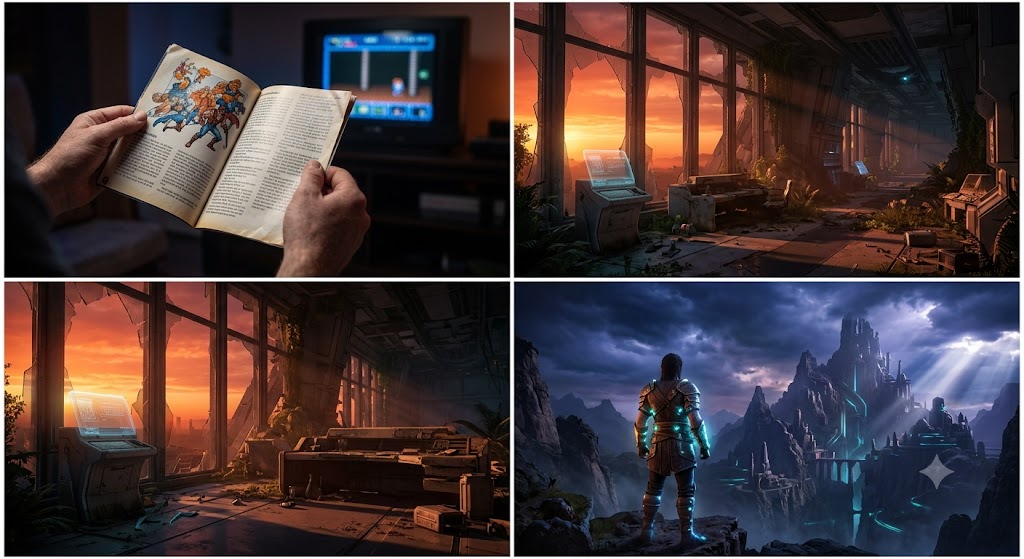
If you grew up gaming in the 80s or 90s, you probably remember the absolute ritual of opening a new game box. Before you even popped the cartridge into the console, you flipped through the glossy pages of the physical manual. Those booklets weren’t just for button layouts they were where the story lived. Because early hardware couldn’t support massive blocks of text or cinematic cutscenes, developers used manual pages to explain why a pixelated blue hedgehog was running at supersonic speeds or how a lone space marine ended up on a demon-infested moon. Fast forward to 2026. The physical manuals are long gone, but something spectacular has taken their place. Gaming has officially entered its golden age of narrative. What was once a medium defined by technical limitations has evolved into the most powerful storytelling canvas on the planet, comfortably surpassing traditional books and films in its capacity for emotional depth. Here is why this year represents the absolute peak era for video game storytellers and how the medium learned to break our hearts and blow our minds in ways Hollywood can only dream of. The Shift from “Watching” to “Inhabiting” The core limitation of a brilliant book or an award-winning film is the invisible wall between the audience and the protagonist. When you watch a movie, you are a passive observer witnessing someone else’s choices. Games shatter that wall through active agency. In a modern narrative masterpiece, you aren’t just watching a character suffer, heal, or grow—you are actively pulling the trigger, making the call, or walking the miles. Consider how our community talks about the landmarks of modern gaming fiction: Environmental Architecture: Stories Written in the Scenery In traditional media, exposition is almost always delivered through dialogue or narration. Games have mastered an entirely different language: environmental storytelling. Modern game designers build worlds where history isn’t explicitly told—it’s discovered. Think of walking through the ruined, underwater art-deco corridors of BioShock, where a knocked-over wheelchair, a bloody smear, and a discarded audio log tell a self-contained tragedy without a single cutscene. In 2026, this technique has reached an astonishing level of maturity. Games like Horizon Zero Dawn use the literal landscape to tell a dual-timeline mystery, contrasting primitive tribal structures against the rusted, giant metal skeletons of a forgotten high-tech past. The player becomes an archaeologist of the apocalypse, piecing together the narrative at their own pace. The 2026 Landscape: Blending Mechanics with Meaning What makes the current era of gaming so uniquely brilliant is that narrative designers no longer treat gameplay and story as separate entities. For decades, John Carmack’s infamous quote—“Story in a game is like a story in a porn movie; it’s expected to be there, but it’s not that important”—hung over the industry. Today, that idea feels like ancient history. The modern era is defined by ludonarrative resonance—when the actual act of playing the game reinforces the emotional themes of the script. The Ultimate Modern Narrative Standard: The best games don’t pause the gameplay to tell you a story; they use the gameplay as the story. Look at how roguelikes have revolutionized the narrative loop. In Hades and its massive sequel, Hades II, dying isn’t a failure screen that resets your progress; it is the literal engine that moves the story forward. Every time you die, you return to the underworld hub to find new dialogue, evolving relationships, and deeper lore. The frustration of losing a run is completely transformed into narrative anticipation. Similarly, games like Disco Elysium turn a player’s internal psychological struggles into dynamic RPG mechanics, proving that a fierce debate between your own “Logic” and “Ancient Reptilian Brain” can be more thrilling than any cinematic explosion. The Verdict We’ve come an incredibly long way from reading backstory paragraphs in a paper booklet while waiting for our consoles to boot up. In 2026, gaming stands tall as the definitive narrative medium of our generation. Writers, actors, developers, and players are collaborating to build living, breathing universes that linger in our minds long after the screen goes dark. We don’t just remember these stories; we remember being there. 💬 What about you? What is the one video game story that completely ruined you emotionally or changed the way you look at storytelling? Let’s talk about it in the comments below!
The Ultimate Co-Op: How Gaming Builds Global Communities
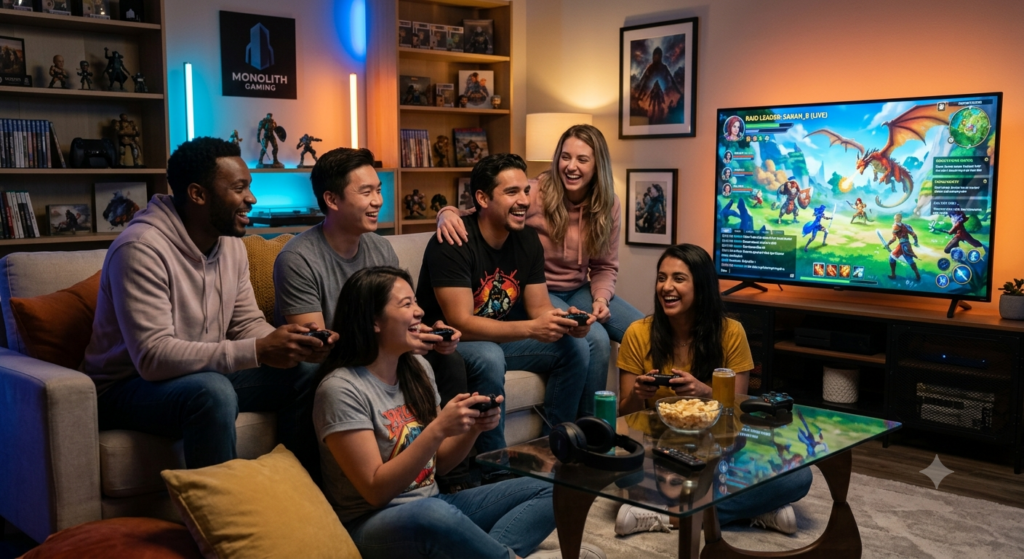
There was a time when video gaming carried a persistent, unfair stereotype. The prevailing image was a solitary hobbyist tucked away in a dimly lit bedroom, eyes glued to a cathode-ray tube screen, completely cut off from the outside world. It was viewed as a fundamentally isolating experience—a digital island where players retreated away from society rather than engaging with it. Fast forward to today, and that outdated narrative has been entirely rewritten. Video gaming has transformed into the world’s most dynamic interactive medium, serving as a masterclass in how to build global, deeply supportive communities. In an era where traditional social spaces are fracturing and digital platforms often drive us apart, gaming has managed to do the exact opposite: it has created the ultimate co-op. From Solo Campaigns to Global Alliances The shift from solitary play to highly collaborative spaces didn’t happen by accident. It evolved as the industry began to understand that the true magic of gaming isn’t just the complex code, the branching narratives, or the hyper-realistic graphics—it’s the human connection forged across the screen. No organization champions this mindset better than Monolith Gaming, whose vision centers on using interactive spaces to foster kindness, inclusion, charity, and meaningful outreach. Their mission highlights a fundamental truth about modern entertainment: gaming is at its absolute best when it is powered by community. It isn’t merely about high scores anymore; it’s about high empathy. When developers and community leaders design with an inclusion-first mentality, the game itself stops being just a piece of software. It becomes a shared digital town square. In these spaces, barriers like geography, language, socio-economic status, and physical ability completely dissolve. The shared objective—whether it’s holding a defensive line in an intense tactical shooter, coordinating a massive 40-person raid, or casually building a virtual farm together—creates an instant, common vocabulary that unites strangers instantly. The Anatomy of an Inclusive Digital Family What makes the modern gaming community look so much like a global family? It boils down to a few core pillars that standard social media platforms often miss entirely: A Blueprint for the Physical World As we look toward the future of how people interact online, the gaming world provides a beautifully clear blueprint for society at large. It teaches us that true community isn’t built merely by putting people in the same digital room; it’s built by giving them something meaningful to achieve together. The solitary bedroom hobbyist hasn’t just left the dark room—they’ve stepped into a vibrant, massive global family that spans across continents and cultures. By prioritizing inclusion, accessibility, and mutual support, gaming has shown the world that no matter how difficult the level, we are always stronger when we play together.