
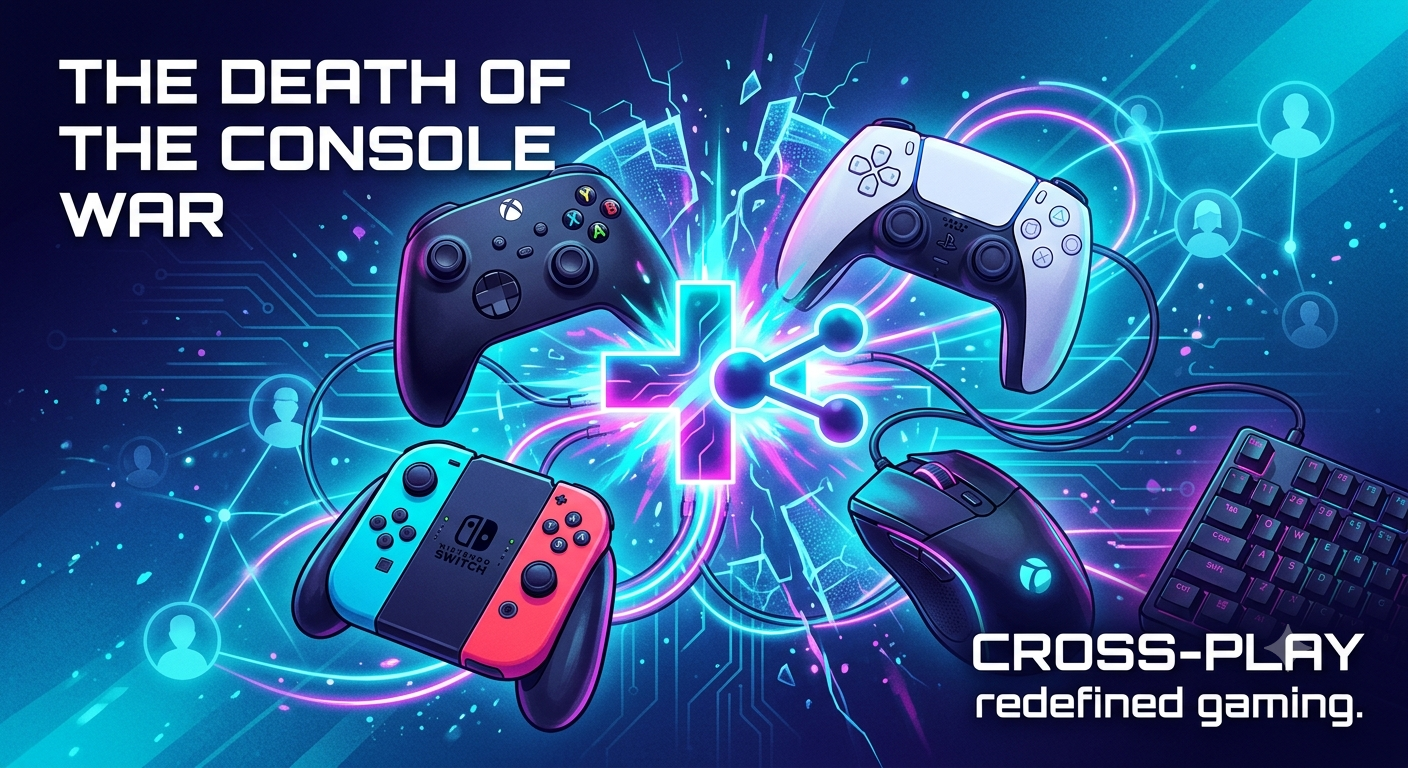
For nearly three decades, playground and forum debates were ruled by a single, intractable question: PlayStation or Xbox? (Or Nintendo, depending on how old-school you were.)
Back then, choosing a console wasn’t just a hardware purchase—it was a socio-cultural pledge of allegiance. If you bought an Xbox 360 to play Halo 3 and your best friend bought a PlayStation 3 to play Uncharted, you didn’t just end up with different plastic boxes under your TVs. You ended up with completely isolated digital lives. The walls between ecosystems were thick, reinforced by corporate self-interest and technological silos.
Fast forward to today, and that tribalism feels like an artifact of an ancient era.
The console war didn’t end with a decisive victory by one manufacturer. Instead, it dissolved because the fundamental nature of online multiplayer changed forever. Cross-play killed the console war—and in doing so, it completely redefined gaming communities.
1. From Fractured Squads to United Friendships
Remember the frustrating dance of trying to organize a weekend gaming session? It used to feel like negotiating a complex treaty:
“I’ve got the game on PlayStation.” “Ah, man. I’m on Xbox.” “Guess I’ll just play solo…”
Online gaming historically suffered from forced fragmentation. Real-world friend groups were routinely split by platform choice, forcing players to compromise on either the hardware they wanted or the friends they wanted to play with.
When games like Fortnite, Rocket League, and Call of Duty: Modern Warfare aggressively pushed cross-platform play into the mainstream, the social dynamic inverted overnight.
Suddenly, it didn’t matter if you were on a PC, a PS5, an Xbox, or a Switch on the couch—you were in the exact same lobby, talking through unified voice channels like Discord. Cross-play took multiplayer gaming from a fragmented hardware lock-in and transformed it into a borderless digital hangout space.

2. The Death of the “Dead Lobby”
Beyond personal relationships, cross-play solved one of online gaming’s most persistent mechanical issues: dwindling player pools.
In the pre-cross-play era, a game’s lifespan was tied directly to its specific platform population. A mid-tier multiplayer title might thrive on PC for six months, sit on life support on PlayStation, and completely die on Xbox. Matchmaking times stretched from seconds into minutes, and regional servers outside North America and Europe often became ghost towns.
By merging player bases, cross-play created massive, unified pools that transformed the player experience:
- Faster Queue Times: Matchmaking engines suddenly had 3x to 4x the active players to pull from at any given moment.
- Fairer Matches: Larger player pools mean skill-based matchmaking (SBMM) algorithms actually work, pairing high-tier players with high-tier players instead of throwing beginners into the meat grinder just to fill a lobby.
- Longevity for Niche Titles: Mid-budget multiplayer games now have a fighting chance to maintain healthy communities years after launch.
3. The Shift from Hardware Walls to Ecosystem Services
When cross-play became an industry standard, platform holders were forced to rethink their entire business models. When your hardware choice no longer dictates who you can hang out with, selling a console purely on “that’s where your friends are” stops working. Sony, Microsoft, and Nintendo could no longer rely on network effects as a moat.
Instead, the industry shifted from hardware lock-in to value-added services:
- Subscription Value: Microsoft doubled down on Xbox Game Pass, shifting the conversation from where you play to how much value you get from your subscription.
- PC Expansion: Sony began porting flagship first-party titles to PC, acknowledging that the future of software sales exists beyond the PlayStation box itself.
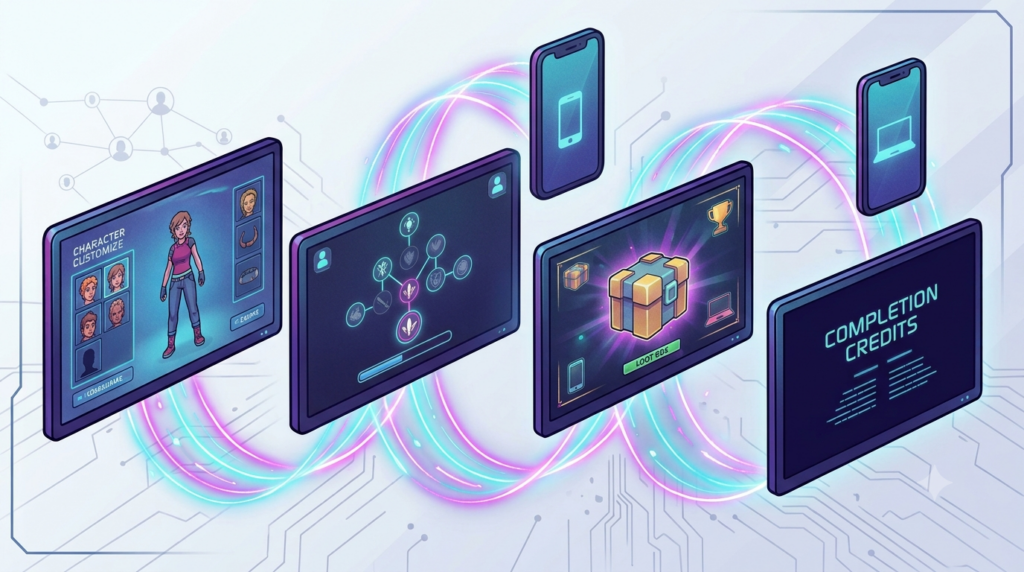
- Cross-Progression: Your unlocked skins, battle passes, and save files now move seamlessly from console to PC to mobile.
The physical console stopped being a walled garden and became just one of many entry points into a broader ecosystem.
4. New Frontiers and Modern Friction Points
It wasn’t a completely seamless transition. The fall of the console walls brought a new set of debate topics to the surface:
- Input Superiority: The core debate shifted from PlayStation vs. Xbox to Mouse & Keyboard vs. Controller (Aim Assist).
- Security & Cheating: Console players suddenly found themselves exposed to the complex world of PC software exploits and wallhacks.
Yet despite these growing pains, virtually no gamer wants to turn the clock back. Input-based matchmaking and opt-out cross-play toggles have given players agency, ensuring the benefits of unified player pools far outweigh the friction.
The Verdict: Gamers Won
The “Console War” made for great 2000s forum banter, but it was ultimately a tax paid by consumers—an artificial barrier that kept friends apart and shortened the lifespans of great games.
Cross-play didn’t just fix matchmaking; it reframed how we view the entire medium. Today, the box under your television is just a renderer. The community, the friendships, and the games themselves are platform-agnostic.
The console war is dead—and multiplayer gaming is infinitely better for it.