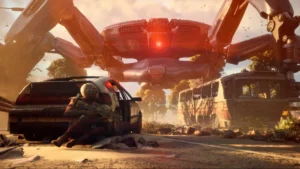
Helldivers 2 doesn’t just ask you to fight for Super Earth, it demands that you bleed for it, laugh through the chaos, and occasionally get obliterated by your own team’s airstrike. Arrowhead Game Studios has delivered a sequel that takes everything people loved about the original and detonates it into a fully realized, third-person spectacle that feels as hilarious as it is brutal. This is a game about teamwork, friendly fire, panic, and glory and somehow it all works beautifully. From Top-Down to Third-Person: A Bold Evolution The most obvious change in Helldivers 2 is the shift from a top-down perspective to a fully third-person shooter. It’s a risky move, but one that pays off immediately. Combat feels heavier, more immersive, and far more cinematic. Every bullet fired, orbital strike called in, and reload fumbled under pressure feels intentional. The new perspective doesn’t dilute the identity of Helldivers, it amplifies it. You’re no longer watching chaos from above; you’re standing in it. Combat: Controlled Chaos at Its Finest Helldivers 2 thrives on tension. Enemies swarm aggressively, ammo is limited, and positioning matters. You’re constantly balancing risk versus reward do you call in that airstrike now, or wait and risk being overrun? Friendly fire remains not just enabled, but central to the experience. Mistakes are frequent, often hilarious, and sometimes catastrophic. But that’s the point. Victory doesn’t come from lone wolves, it comes from communication, discipline, and knowing when not to press the big red button. Stratagems: Power With Consequences Stratagems are the soul of Helldivers 2. Calling in turrets, orbital bombardments, supply drops, and mechs never gets old, but every stratagem is a double-edged sword. Mistime a call-in or misplace a beacon, and you’re just as likely to wipe your squad as the enemy. This risk-reward design creates unforgettable moments that no scripted campaign could ever replicate. The Galactic War: A Living, Player-Driven Conflict Helldivers 2’s Galactic War system is one of its most compelling features. Every mission contributes to a shared, global effort to push back enemy factions across the galaxy. Successes and failures matter. Entire planets can be liberated or lost based on player performance, creating a sense of scale and consequence that few multiplayer games achieve. You’re not just completing missions, you’re participating in a war effort alongside thousands of other players. Satire, Style, and Super Earth Helldivers 2 leans hard into its satirical tone, skewering authoritarian propaganda, blind patriotism, and militaristic bravado, all while playing it completely straight. Super Earth’s over-the-top broadcasts, mission briefings, and terminology are laugh-out-loud funny without ever breaking immersion. The humor doesn’t undercut the action; it enhances it. It’s rare for a game to balance comedy and intensity this well. Co-Op Excellence (and Co-Op Catastrophes) Helldivers 2 is at its best with friends. Drop-in/drop-out co-op works seamlessly, and the game constantly encourages coordination. That said, even well-coordinated teams will fail, often spectacularly. And that’s where Helldivers 2 shines. Failure is part of the fun, and every disaster becomes a story you’ll retell later. Playing solo is possible, but this is a game clearly designed around shared chaos. Progression and Replayability Progression in Helldivers 2 feels rewarding without being overwhelming. New weapons, stratagems, and upgrades unlock at a steady pace, encouraging experimentation without forcing grind-heavy loops. The variety of mission types, enemy factions, and planetary conditions keeps gameplay fresh. No two deployments ever feel exactly the same. Performance and Presentation Visually, Helldivers 2 is a massive step forward from its predecessor. Explosions are spectacular, environments are richly detailed, and enemy designs are both threatening and distinctive. Performance is generally solid, even during large-scale firefights, and the sound design sells the chaos beautifully, from incoming artillery to the screams of panicked squadmates. Pros and Cons Pros Cons Final Verdict: For Super Earth, Always Helldivers 2 is not about perfection. It’s about survival, coordination, and laughing through disaster. It’s a rare sequel that understands its identity and boldly evolves without losing its soul. If you enjoy cooperative games that reward teamwork, punish mistakes, and generate unforgettable moments, Helldivers 2 is essential. Score: 9.5 / 10 Now grab your squad, call in the wrong stratagem, and die gloriously for democracy.
Category: Game Reviews
Borderlands 4 Review: Mayhem Evolves, but the Madness Remains
The Borderlands franchise has always lived in a space few games dare to occupy, part looter-shooter, part comedy, part chaotic power fantasy. With Borderlands 4, Gearbox isn’t trying to reinvent that identity. Instead, it looks poised to refine, modernize, and expand on what has made the series legendary while addressing long-standing community feedback. From its reveal alone, Borderlands 4 signals confidence: louder guns, sharper visuals, deeper systems, and a renewed focus on player-driven chaos. For longtime Vault Hunters and newcomers alike, this entry feels like a deliberate step forward rather than a risky leap. A Franchise Built on Controlled Chaos At its core, Borderlands has always been about one thing: mayhem with purpose. Borderlands 4 continues this legacy by leaning fully into what the series does best, fast-paced gunplay, absurd weapon variety, and cooperative carnage that feels just as fun solo as it does with friends. Early impressions suggest combat feels more responsive and fluid, with smoother movement, cleaner hit feedback, and more reactive enemies. The series’ signature “run-and-gun” identity remains intact, but it appears more polished and deliberate than ever before. Gunplay and Loot: The Heart of Borderlands If there’s one expectation every Borderlands game must meet, it’s this: the guns must be ridiculous and Borderlands 4 looks ready to deliver. While exact loot mechanics are still under wraps, Gearbox has made it clear that weapon variety remains a cornerstone. Players can expect: Compared to Borderlands 3, which leaned heavily into spectacle, Borderlands 4 appears to focus more on meaningful choice weapons that aren’t just flashy, but tactically interesting. Vault Hunters and Playstyles Borderlands has always thrived on its Vault Hunters, and Borderlands 4 looks set to continue that tradition with a new cast designed around flexibility and build depth. Rather than locking players into rigid roles, Borderlands 4 seems to encourage experimentation. Skill trees appear designed to support multiple viable builds per character, allowing players to fine-tune how they approach combat, whether that’s raw damage, crowd control, support, or pure chaos. This evolution reflects lessons learned from Borderlands 3, where build diversity was fun but sometimes overwhelming. Borderlands 4 looks to strike a better balance between accessibility and depth. World Design: Bigger, Smarter, and More Alive Borderlands 4’s environments appear more interconnected and dynamic than previous entries. While Pandora remains central to the franchise’s identity, the world design suggests expanded biomes, more verticality, and improved environmental storytelling. Expect: The cel-shaded art style remains iconic, but with modern lighting and effects that give Borderlands 4 a sharper, more refined look without losing its comic-book charm. Humor and Tone: Finding the Right Balance Borderlands’ humor has always been divisive, beloved by some, grating to others. Borderlands 4 appears to take a more balanced approach, retaining its absurdity while dialing back on constant noise in favor of sharper, more intentional comedy. If Borderlands 3 occasionally felt like it was trying too hard to be funny, Borderlands 4 feels more self-aware. The jokes land harder when they’re not nonstop, and the world feels more grounded without losing its personality. Co-Op and Community Play Co-op has always been the soul of Borderlands, and Borderlands 4 continues to embrace that identity. Drop-in/drop-out multiplayer, scalable difficulty, and loot systems that respect all players remain core features. Whether you’re playing with longtime friends or jumping into public matchmaking, Borderlands 4 looks designed to keep the chaos fair and fun for everyone involved. Quality-of-life improvements, from inventory management to mission tracking, suggest Gearbox has been listening closely to community feedback. How Borderlands 4 Stacks Up to the Series Rather than chasing nostalgia or overcorrecting past mistakes, Borderlands 4 feels like a confident synthesis of everything the franchise has learned. Final Verdict: A Promising Future for Vault Hunters Borderlands 4 doesn’t need to reinvent the franchise, it needs to refine it. Based on what we’ve seen so far, that’s exactly what it’s doing. With improved gunplay, smarter world design, more flexible builds, and a more balanced tone, Borderlands 4 feels like a natural evolution rather than a risky departure. It respects its roots while clearly aiming to meet modern player expectations. If Gearbox delivers on its promises, Borderlands 4 could stand as the most complete Borderlands experience to date. For veterans, it’s another chance to dive back into beautifully controlled chaos.For newcomers, it may be the best place yet to start the hunt.
Arc Raiders Review: A High-Octane Adventure Worth Joining
Arc Raiders is one of the most exciting multiplayer action titles to hit the gaming scene in recent years. Combining fast-paced combat, cooperative exploration, and a visually stunning sci-fi world, it has quickly become a favorite among fans of tactical shooters and loot-driven games. As someone who has spent dozens of hours in its missions, I can confidently say that Arc Raiders delivers both adrenaline and strategy in equal measure. Gameplay: Fast, Fluid, and Rewarding Arc Raiders thrives on the thrill of movement and teamwork. Players assume the role of elite operatives tasked with taking down rogue AI, battling environmental hazards, and exploring mysterious alien landscapes. Combat feels fluid and responsive, with a focus on: The combination of ranged weapon combat and melee options adds depth to encounters. Each mission requires careful coordination, solo runs are possible, but playing as a team is both more effective and more satisfying. Visuals and World Design Arc Raiders’ aesthetic is sleek and futuristic, with a level of detail that rivals some AAA titles. Alien landscapes are vibrant yet threatening, and the sound design complements the visuals perfectly, from the hum of energy weapons to the pulse of enemy drones. The environments aren’t just pretty, they’re interactive, with destructible objects, terrain hazards, and multiple routes that reward exploration and tactical thinking. Story and Lore While Arc Raiders emphasizes gameplay over narrative, its story provides a compelling backdrop. The conflict between human operatives and rogue AI feels grounded in a plausible near-future sci-fi setting. Characters are introduced with distinct personalities and motivations, giving players a sense of purpose beyond just mission objectives. Fans of lore-heavy titles will appreciate the hidden collectibles, codex entries, and environmental storytelling that flesh out the universe. Multiplayer Experience Arc Raiders truly shines in cooperative multiplayer. Missions scale with the number of players, ensuring that solo runs remain challenging but team-based play is more dynamic. Communication is key, and the game’s matchmaking tools make finding partners straightforward. Guilds and community hubs enhance the social experience, giving long-term players reasons to return for both competition and collaboration. Progression and Rewards The game features a satisfying loot system. Completing missions and challenges rewards players with weapons, gear, and cosmetic items. Customization is meaningful — gear isn’t just cosmetic, but also affects gameplay through stats and abilities. Seasonal events and updates keep the game fresh, offering limited-time missions and rewards that encourage repeat play without feeling grindy. Performance and Accessibility Arc Raiders is optimized for a range of platforms and hardware. Loading times are minimal, controls feel tight, and the game runs smoothly in both solo and co-op modes. Accessibility options, including customizable controls and HUD adjustments, make the game approachable for newcomers and experienced players alike. Pros and Cons Pros: Cons: Final Verdict Arc Raiders is a must-play for fans of cooperative action games. Its combination of fast-paced combat, strategic teamwork, and immersive sci-fi environments makes it a standout in the current multiplayer landscape. While the narrative takes a backseat to gameplay, the story and world-building are still compelling for those who seek it. With active updates, seasonal events, and a growing player base, Arc Raiders offers both immediate excitement and long-term engagement. Score: 9/10 If you’re looking for a game that balances skill-based action, tactical cooperation, and a rich, futuristic world, Arc Raiders is well worth your time.
Diablo IV: A Return to Darkness, Refined by Fire (D4 Review)
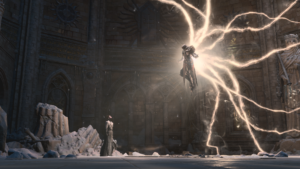
Few franchises carry the weight that Diablo does. For many of us, Diablo wasn’t just a game, it was a late-night ritual, a test of friendships (“don’t ninja-loot that”), and a gateway into dark fantasy obsession. With Diablo IV, Blizzard didn’t just try to recapture that magic, they reforged it in hellfire, and by Season 11, the result feels more confident, more complete, and more Diablo than it has in decades. A World Worth Dying In (Again and Again) From the moment you step into Sanctuary, Diablo IV makes one thing very clear: this world hates you, and that’s exactly why you’re here. Gone is the colorful, almost cartoonish tone of Diablo III. In its place is a grim, oppressive atmosphere that feels far closer to Diablo II’s gothic despair, but realized with modern fidelity. Blood stains the snow. Villages feel desperate, not quirky. Dungeons are claustrophobic, oppressive, and soaked in dread. Blizzard absolutely nailed the tone. Sanctuary feels ancient, cursed, and indifferent to your survival, which makes every small victory feel earned. Combat: Weighty, Brutal, and Addictive Diablo IV’s combat is one of its strongest pillars. Every class feels distinct, tactile, and impactful. Compared to Diablo III’s faster, arcade-style combat, Diablo IV slows things down just enough to make positioning, cooldowns, and enemy mechanics matter again, a design philosophy longtime Diablo II fans will immediately appreciate. By Season 11, balance has reached one of the healthiest states the game has seen. Multiple builds per class feel viable, experimentation is rewarded, and you’re no longer forced into a single “meta or bust” playstyle. Season 11: Where Diablo IV Hits Its Stride Season 11 doesn’t try to reinvent Diablo IV, it refines it, and that’s exactly what the game needed. This season focuses on: Seasonal mechanics integrate naturally into gameplay instead of feeling bolted on, and the reward loop is tighter, clearer, and more satisfying. Most importantly, Season 11 respects the player’s time. Progression feels steady, not exhausting. You’re encouraged to push further, not burned out trying to keep up. Endgame: Finally Worth the Grind At launch, Diablo IV’s endgame had promise, but by Season 11, it has purpose. Nightmare Dungeons, world events, boss farming, and seasonal systems now work together instead of competing for attention. There’s always something productive to do, whether you’re playing for 30 minutes or five hours. Compared to Diablo III’s Greater Rift tunnel vision, Diablo IV offers variety. Compared to Diablo II’s endless Baal runs, it offers structure. Grinding feels intentional again, and that’s a massive win. Loot: Less Confetti, More Meaning Loot in Diablo IV sits comfortably between its predecessors. By Season 11, itemization improvements have made drops feel exciting again. You’re not drowning in useless legendaries, and when something powerful drops, you feel it. Aspects, uniques, and build-defining items now hit the sweet spot where you’re chasing upgrades, not just higher numbers. Lore: Lilith Steals the Show Lilith is easily one of the strongest antagonists the Diablo franchise has ever delivered. Where Diablo himself represents raw destruction, Lilith represents ideology. She doesn’t want to burn Sanctuary, she wants to claim it. Her presence introduces moral ambiguity rarely explored in earlier Diablo titles. The game isn’t afraid to ask uncomfortable questions: For lore fans, Diablo IV feels like a love letter to the franchise’s darker roots, expanding Sanctuary’s history without relying on cheap nostalgia. Multiplayer Without Losing the Solo Soul The shared-world elements are subtle, and that’s a good thing. You’ll encounter other players in towns and world events, but Diablo IV never forgets that this is still a solo-first experience at its core. Multiplayer enhances the world instead of hijacking it. Whether you play alone, with friends, or in short sessions, Diablo IV adapts to your pace. Comparing the Diablos: Where IV Stands Diablo IV doesn’t try to be the best at everything, it aims to be the most complete Diablo experience, and by Season 11, it’s succeeding. Final Verdict: Diablo Is Back Where It Belongs Diablo IV isn’t perfect, no Diablo game ever has been. But by Season 11, it feels confident, grounded, and deeply respectful of the franchise’s legacy. Diablo isn’t just about killing demons. It’s about atmosphere, struggle, obsession, and the endless pull of “just one more run.” For veterans, it feels like coming home.For newcomers, it’s the best entry point the series has ever offered. Sanctuary is broken.Hell is waiting.And Diablo IV is absolutely worth the descent.