A roguelike is a game where every attempt is different and death sends you back to the start. That sounds punishing, and it is. It is also the reason the genre is so hard to put down. Here is where it came from and why it works.
Where the name comes from
The genre is named after Rogue, a dungeon-crawling game released in 1980. Rogue built a new dungeon every time you played, and when your character died, that was the end. Games that followed the same idea became known as roguelike games, which simply means “like Rogue”.
The two core ideas
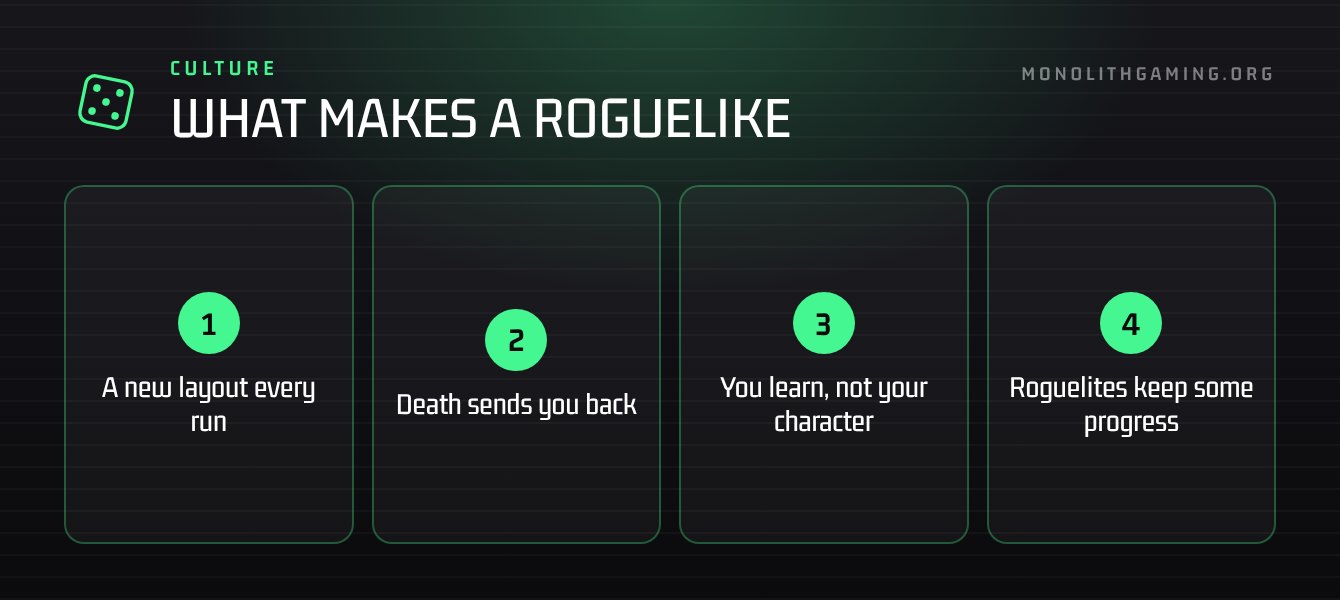
First, the levels are generated fresh each time, so you cannot memorise them. Second, death is permanent for that attempt. Together they mean that every run is a new problem, and that what you carry forward is your own understanding of the game.
Roguelike or roguelite?
Many modern games soften the formula. You still restart after dying, but you keep something, such as new abilities, unlocked items or story progress. These are often called roguelites. Hades, Dead Cells and Slay the Spire are well-known examples. In everyday conversation the two words are used almost interchangeably.
“In a roguelike, the character starts over. The player does not.”
Why losing feels good
In most games, failing means repeating the same section. In a roguelike, failing means a fresh run with different items and different choices. You are rarely bored, and you can usually see what you would do differently. That makes “one more run” very tempting.
Why the genre keeps growing
Roguelikes offer a great deal of play from a small amount of hand-built content, which suits small studios. Runs are short, so they fit into a busy evening. And because each run is different, they are fun to watch and to talk about.
Where to start
If you are new, choose a roguelite. The permanent upgrades make early runs less harsh, and the sense of progress keeps you going while you learn. Expect to lose your first several runs. Everyone does.
Common roguelike terms
A few words come up again and again. A run is a single attempt from start to finish. A build is the combination of items and abilities you collect during that run. A seed is the code that generates a particular layout, and some games let you share it so friends can try the same run. Meta progression means anything you keep between runs.
Tips for your first roguelike
Treat early runs as scouting. Try items you do not understand so you learn what they do. Read enemy patterns before you worry about speed. When a run ends, name one thing that went wrong and avoid it next time. Above all, do not restart a run the moment it looks bad. Some of the best wins come from a start that seemed hopeless, and learning to recover is the most useful skill the genre teaches.
The takeaway
A roguelike turns failure into the main way you learn. If you enjoy getting a little better each time, the genre has years of play waiting. To see what else is on the way, check the Release Radar.